|
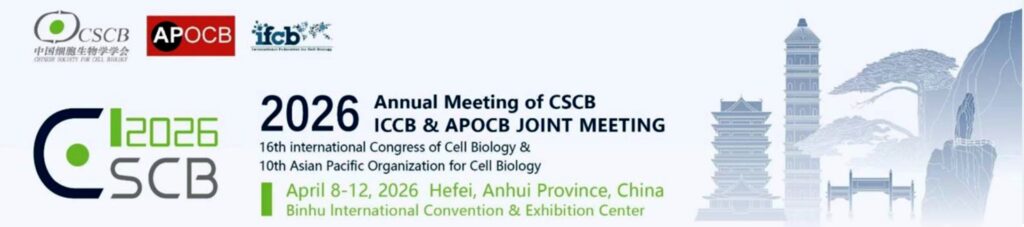
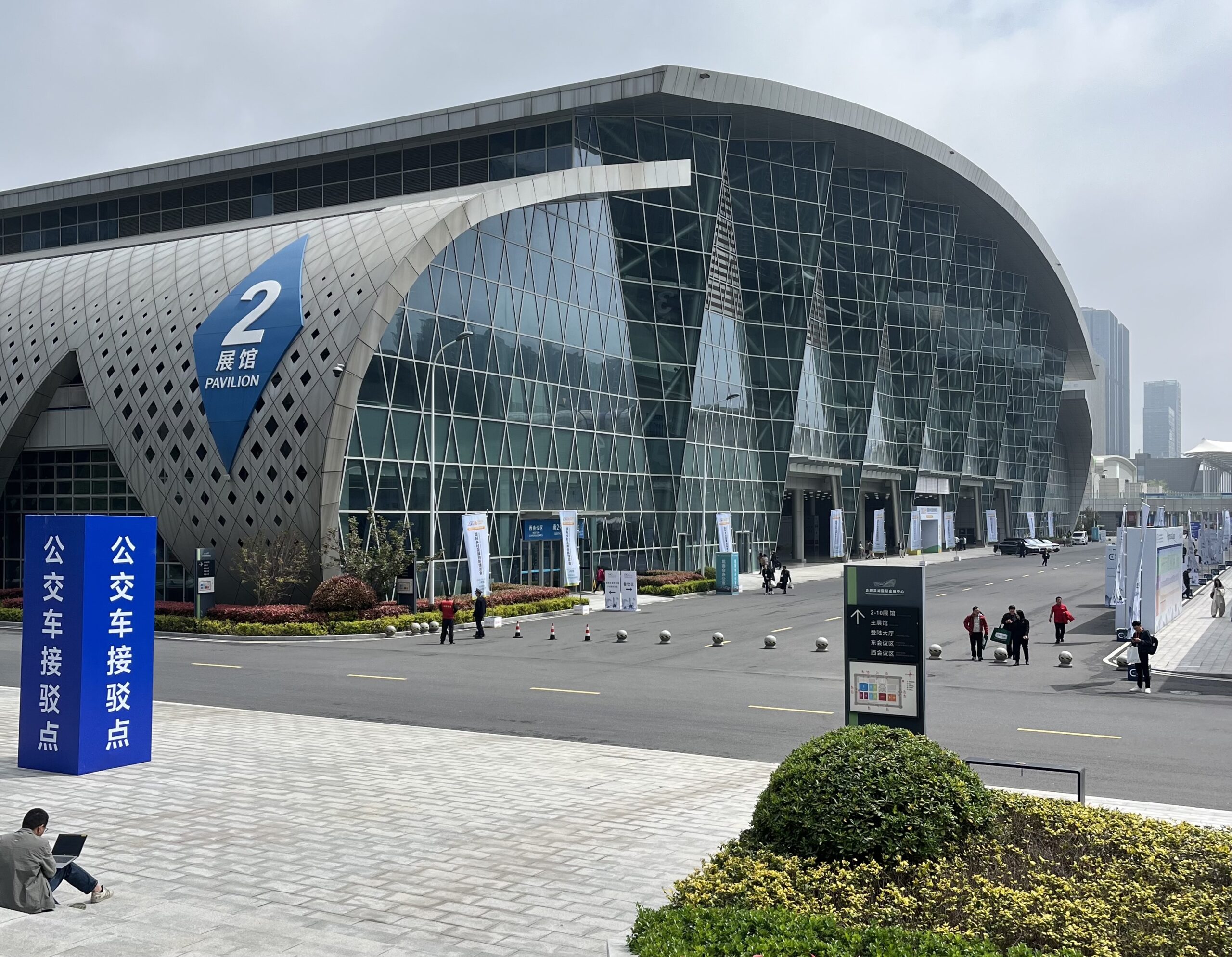
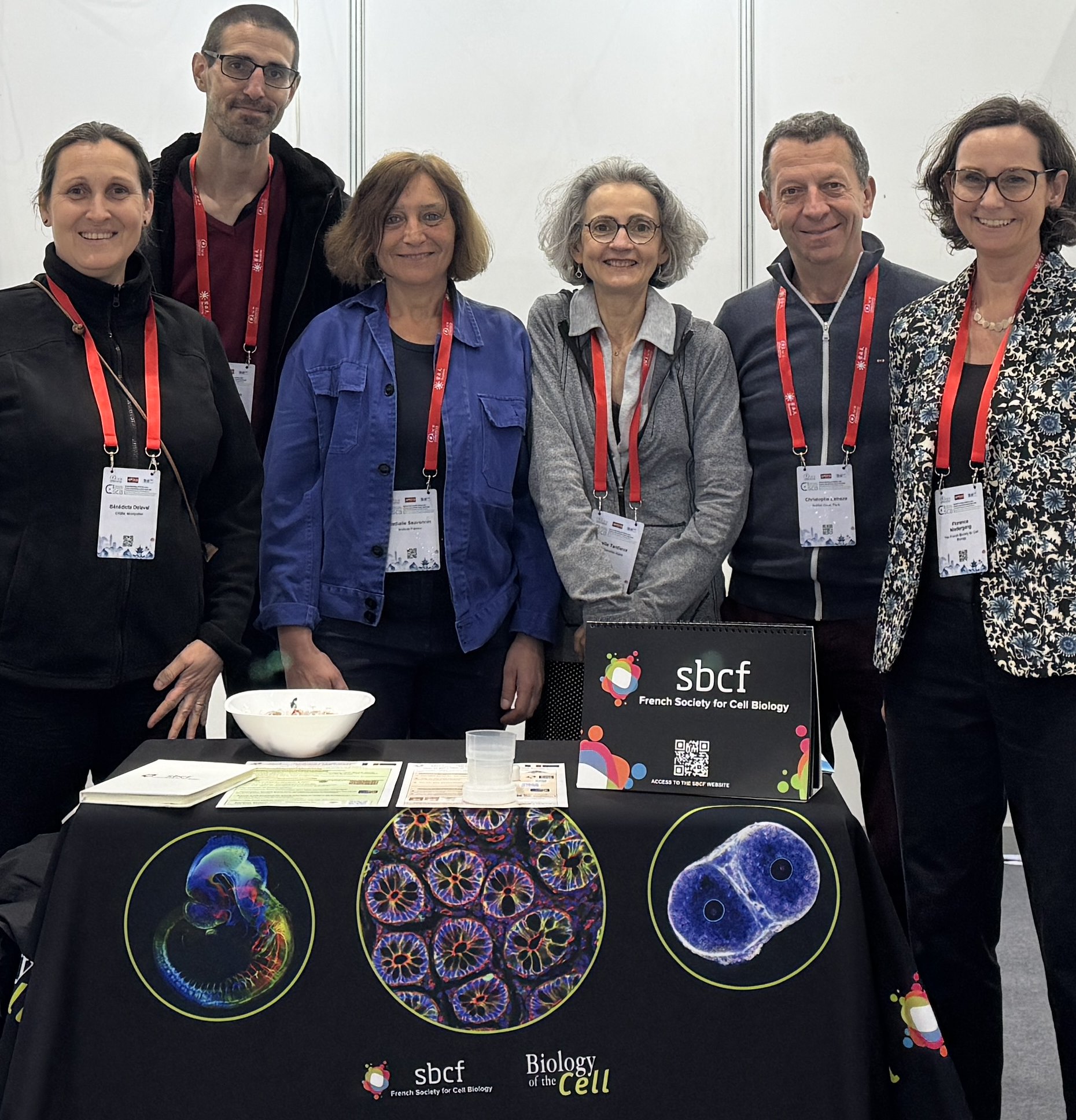
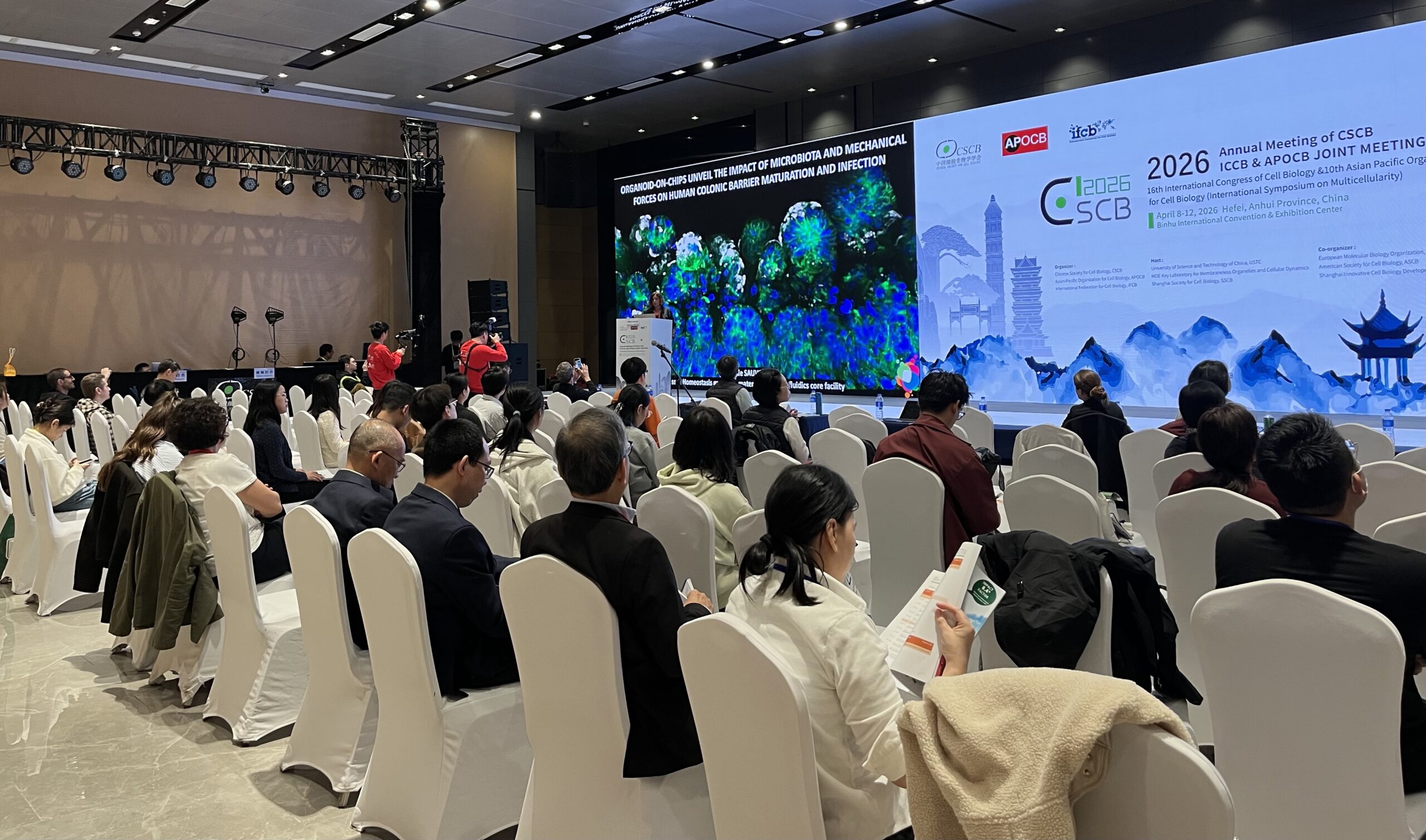
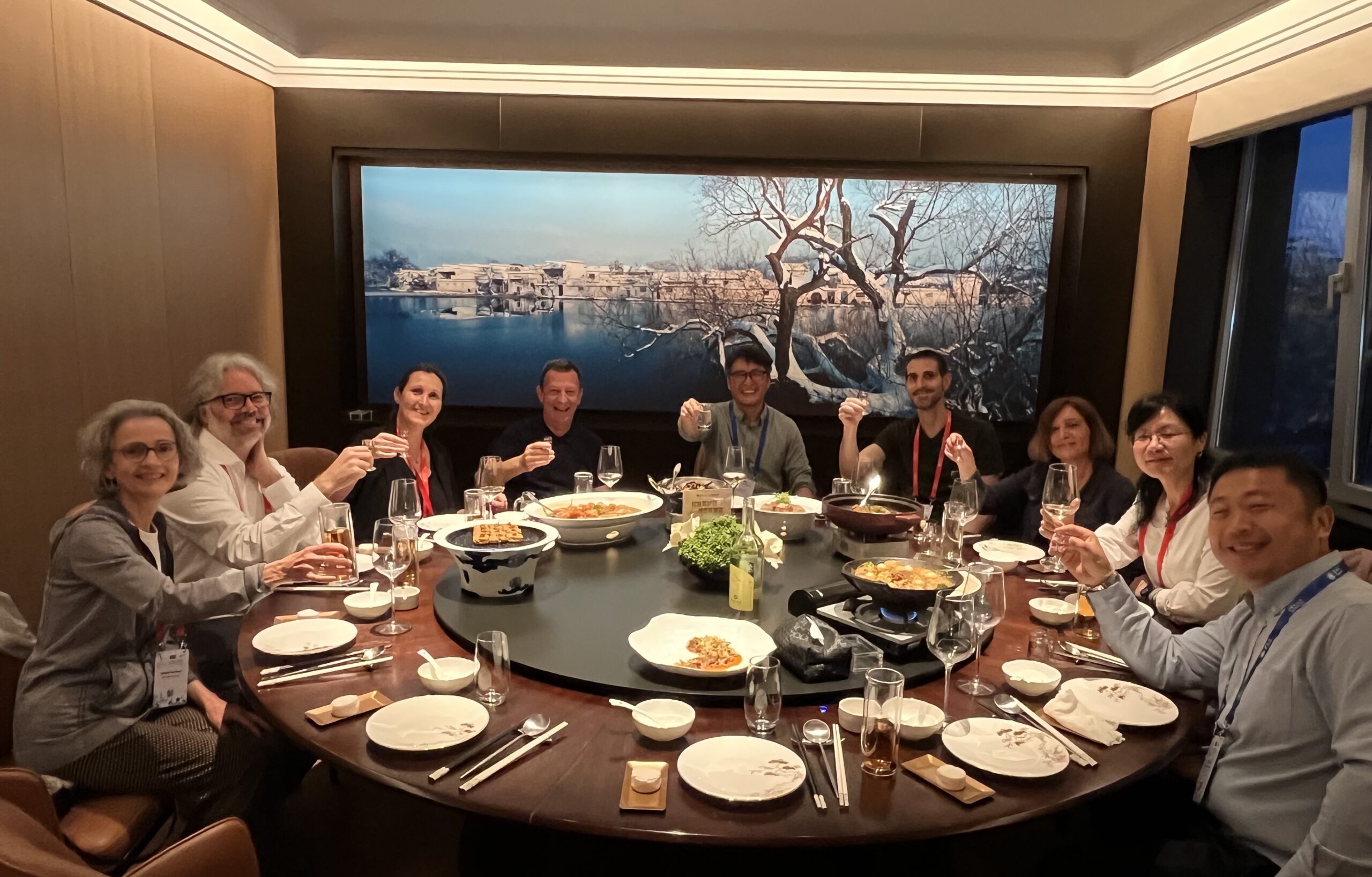
En 2026, la SBCF s’est pleinement mobilisée comme partenaire du congrès annuel de la Société Chinoise de Biologie cellulaire (CSCB). Cet événement majeur pour notre communauté internationale a été organisé par la CSCB, conjointement avec la Société d’Asie du Pacifique de Biologie cellulaire (APOCB) pour son 10ème congrès mais aussi sous l’égide de la Fédération Internationale de Biologie Cellulaire (IFCB) dont c’était le 16ème congrès. Il s’est tenu du 8 au 12 Avril dernier, à Hefei, la capitale de la province d’Anhui, située à environ 400 km à l’Ouest de Shanghai. Ce congrès a réuni dans le très moderne « Binhu International Convention Center » (Photo) plus de 2000 scientifiques, parmi lesquels de nombreux chercheurs, enseignants et étudiants, et une délégation SBCF (Photo)!
Le choix de Hefei par la Société Chinoise de Biologie Cellulaire reflète le positionnement de cette ville comme l’un des principaux centres scientifiques de Chine, où recherche fondamentale, innovation technologique et collaborations internationales sont fortement intégrées, avec l’implantation de plusieurs instituts de recherche de premier plan (« University of Science and Technology of China »/USTC, et les instituts de l’Académie chinoise des sciences). Les domaines stratégiques emblématiques à Hefei incluent les technologies quantiques, les sciences biomédicales, l’intelligence artificielle, la physique appliquée et l’innovation technologique.
Comment la SBCF s’est-elle impliquée dans ce congrès ?
En avril 2025, à la suite d’une réunion avec les organisateurs chinois, la SBCF a proposé une contribution au congrès de 2026 sous la forme d’une session thématique intitulée « Interactions Hôtes–Pathogènes« . Parallèlement à cette initiative portée par la SBCF, un appel à manifestation d’intérêt a également été lancé auprès de ses membres afin d’identifier les collègues souhaitant présenter leurs travaux scientifiques dans les autres sessions organisées par les comités scientifiques issus des trois partenaires principaux (CSCB, APOCB et IFCB). Parmi l’éventail des thématiques transversales planifiées, étaient fléchés la biologie du développement, le vieillissement et les cellules souches, l’homéostasie et les dysfonctionnements métaboliques, la biomécanique et la réparation tissulaire, les interactions dynamiques entre organites et processus subcellulaires, tout en accordant une place importante à la médecine cellulaire, aux stratégies d’intervention thérapeutique et aux approches interdisciplinaires émergentes. Cet appel a été diffusé via le site internet de la SBCF ainsi que ses différents supports de communication (Gazette Avril 2025).
Après validation par les différents comités d’organisation impliqués et formalisation des invitations, la SBCF a été représentée par sept de ses membres : D. Delacour (IBDM, Marseille), B. Delaval (CRBM, Montpellier), R. Gaudin (IRIM, Montpellier), C. Lamaze (Institut Curie, Paris), F. Niedergang (Institut Cochin, Paris), N. Sauvonnet (Institut Pasteur, Paris) et I. Tardieux (IAB, Grenoble). Nous avons également invité notre collègue allemand, F. Frischknecht (Université d’Heidelberg), spécialiste de la biologie des microorganismes parasites à se joindre à notre délégation, plus spécifiquement dans le cadre de notre session thématique.
Renforcement des liens avec les communautés de biologie cellulaire internationales
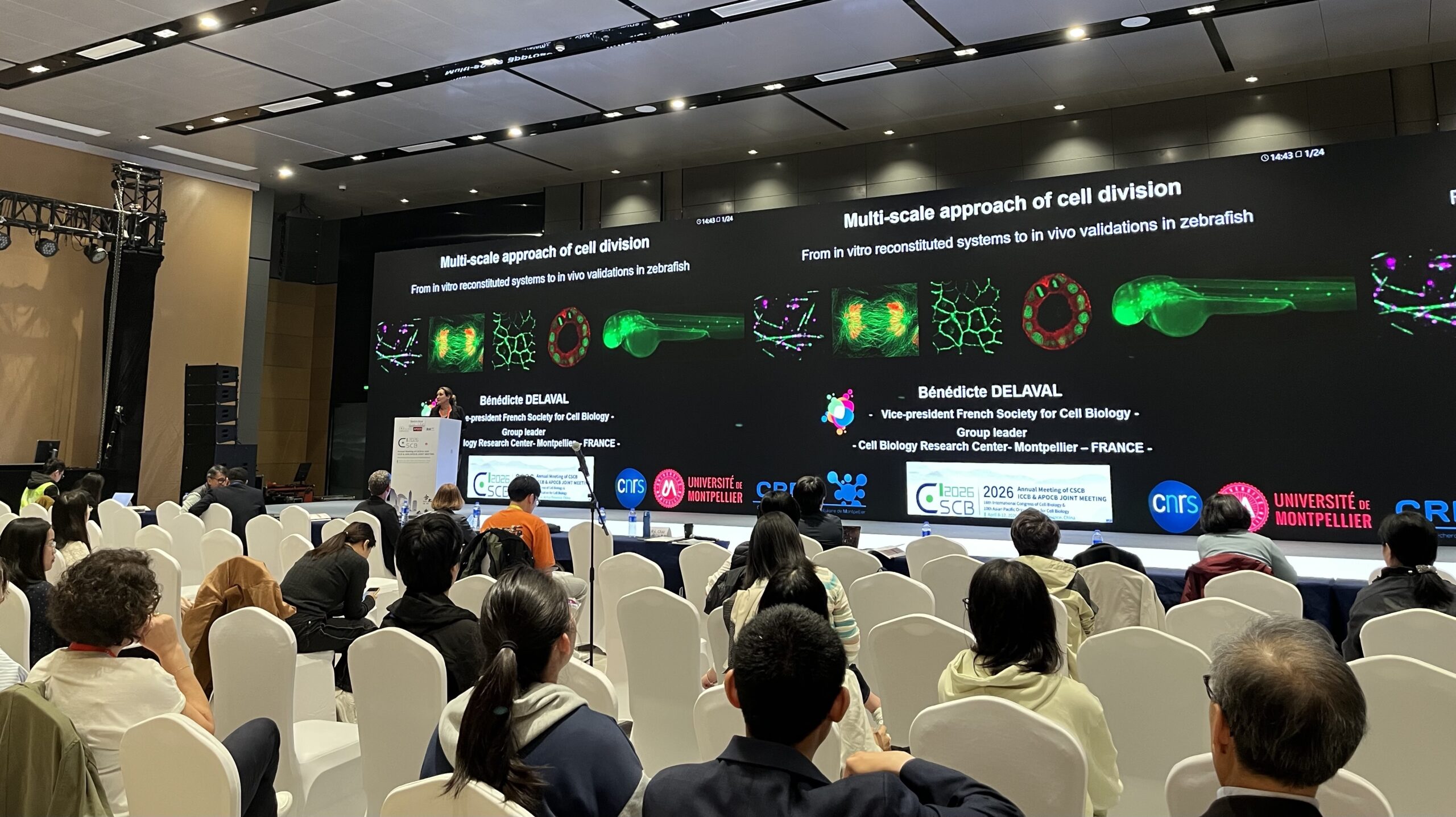
La SBCF a bénéficié d’un accueil très amical, illustré par plusieurs sessions d’échanges avec nos homologues chinois, témoignant de leur volonté de favoriser les interactions scientifiques internationales et de renforcer les collaborations avec nos sociétés européennes (Photos 1, 2, 3). Invitée notamment à participer à l’Assemblée Générale de l’IFCB, la présidence de la SBCF, accompagnée de membres de la délégation présents, a engagé des discussions constructives qui ont contribué à renforcer la visibilité et le positionnement de la SBCF au sein de l’environnement international et des instances fédératives en biologie cellulaire.
C’est un point que nous souhaitons souligner dans la mesure ou l’IFCB organise un congrès biannuel. Si les partenariats sont déjà établis avec la Société australienne pour l’édition 2028 (J. Zinker) et probablement avec la Société brésilienne pour celle de 2030 (C.Y.I Yan), la SBCF a d’ores et déjà manifesté son possible intérêt pour accueillir l’édition 2032. Une telle perspective pourrait s’inscrire, à terme, dans une dynamique concertée associant les sociétés savantes françaises concernées et déjà souvent partenaires de la SBCF ainsi que les sociétés européennes de biologie cellulaire, afin de favoriser une approche collective et de facto fédératrice.
Un partenaire international privilégié: l’IFCB
Dans cet esprit, ces échanges ont également constitué une occasion précieuse d’appréhender la place et les missions de l’IFCB. Fondée officiellement en novembre 1972 à Saint-Louis (Missouri, USA), l’IFCB est une organisation scientifique internationale qui s’est progressivement développée en fédérant des sociétés nationales et régionales de biologie cellulaire à l’échelle mondiale. Alors que son objectif historique demeure la promotion de la coopération internationale au service du développement de la recherche en biologie cellulaire, l’IFCB insiste aujourd’hui sur les dimensions collaborative et interdisciplinaire de cette discipline, une orientation particulièrement bien illustrée lors du congrès Hefei 2026. Parmi les missions actuelles de l’IFCB, et soutenues par un budget propre, figurent notamment l’appui à l’organisation de congrès scientifiques, d’ateliers de formation, ainsi que l’accompagnement à la création et au développement de communautés et sociétés locales. Dans ce contexte, la SBCF a souligné l’importance de renforcer la circulation des informations à travers une actualisation et une meilleure valorisation de son site internet.
Le bureau exécutif de l’IFCB, structuré autour de la présidente (R-H Chen) et vice-présidente (Y-H Chi) toutes les deux basées à Taiwan, associe également six vice-présidents représentant les différents continents. L’Europe est actuellement représentée par F. Niedergang qui a également exercé la présidence de la SBCF (2022-2024), apportant ainsi un éclairage singulier à la volonté de la SBCF de prolonger les contacts établis à Hefei et d’inscrire cette dynamique dans la durée. Au coeur des perspectives à court terme, une meilleure connaissance de l’identité, des priorités et des stratégies des Sociétés européennes de biologie cellulaire, se conjugue avec l’ambition de favoriser l’émergence d’initiatives paneuropéennes diversifiées. Les opportunités de développement apparaissent, à ce titre, nombreuses et s’appuient sur des actions partenariales précédentes.
Notre expérience à Hefei a été marquée non seulement par l’appréciation générale d’une recherche de très haut niveau, mais également par l’ampleur des moyens déployés et par les succès des développements de technologies innovantes. Cette dynamique est évidente dans le domaine de l’imagerie du vivant, couvrant des approches depuis les échelles macroscopiques aux résolutions nanoscopiques, comme dans celui de la micro- et de la macro-robotique, où de nombreuses applications concrètes sont déjà déployées, notamment pour la production de réactifs à forte demande par notre communauté de biologistes cellulaires. Grâce à un espace réunissant de très nombreux stands technologiques en marge du programme scientifique, cette immersion a été particulièrement marquante, voire parfois surprenante par l’intensité des capacités opérationnelles. Ce congrès a également permis de mettre en évidence une évolution objectivement constatée de la situation au cours des dernières années, permettant aujourd’hui à la Chine de proposer de nombreuses offres de qualité pour l’accueil des étudiants et des chercheurs, et de renforcer ainsi, aux niveaux national et international, l’attractivité de ses instituts de recherche.
Rencontre avec le représentant du CNRS en Chine
Enfin, en dehors de l’objectif atteint qui visait à mieux positionner la SBCF au sein d’un environnement international fédératif, nous avons également souhaité recueillir des informations plus ciblées sur les ouvertures et partenariats franco-chinois susceptibles d’intéresser chacun d’entre vous. C’est dans cette perspective que nous avons organisé une rencontre avec notre collègue F. Cuevas, actuel directeur du bureau du CNRS en chine et basé à Pékin, qui s’est déplacé sur le site du congrès pour nous présenter les modalités, atouts et limites ou contraintes des partenariats franco-chinois. Cet entretien très instructif a mis en lumière un soutien fort du CNRS dans des actions structurantes avec nos collègues chinois. A ce titre, les participations des chercheurs à des congrès internationaux, comme dans la co-organisation d’ateliers à visée d’échanges et de formations sur des thématiques ciblées sont en forte croissance et servent comme d’excellents relais pour les étudiants et chercheurs français souhaitant expérience dans les laboratoires de pointe des instituts chinois. Réciproquement, ces actions peuvent aussi permettre d’identifier des étudiants, notamment avec le label « Double First-Class Construction » désireux de se former dans nos équipes en France et Europe.
Pour toutes les informations détaillées, il est possible d’accéder aux publications du bureau du CNRS en Chine, actuelles et passées :https://beijing.office.cnrs.fr/publications/. Concernant les aspects de sureté pour des collaborations avec des partenaires universitaire, le lien suivant émanant d’un organisme australien présente les informations compatibles avec les requis de notre sécurité nationale https://unitracker.aspi.org.au/ … N’hésitez pas à contacter F. Cuevas qui centralise beaucoup d’informations utiles dans la construction de projets collaboratifs et d’actions de coopération.
Pour terminer cette gazette, je souhaite remercier l’ensemble de la délégation SBCF dont toutes les présentations orales, très positivement discutées, ont largement contribué à illustrer la qualité et la diversité des expertises présentes au sein de notre société. Notre impact dans le domaine des interactions entre cellules/organismes hôtes de microbes a aussi permis de valoriser ces derniers comme des sondes biologiques ultra-performantes pour explorer les processus fondamentaux des cellules et tissus desquels ils exploitent les propriétés.
Enfin, mes remerciements vont au comité d’organisation (F. Niedergang, B. Delaval et R. Gaudin) comme à H. Sahut (agence Atout.com) pour leur soutien constant à la préparation de cette aventure chinoise.
J’adresse tous mes voeux à la prochaine présidence et conseil de la SBCF pour impulser un partenariat fort entre les Sociétés de Biologie Cellulaire « soeurs » et soutenir une Fédération Internationale de Biologie Cellulaire pro-active.
Isabelle Tardieux,
Présidente de la SBCF, pour la délégation SBCF
Review and Outcomes of the International Cell Biology Congress in Hefei (China)
In 2026, the SBCF was fully engaged as a partner of the annual congress of the Chinese Society for Cell Biology (CSCB). This major event for our international community was organized by the CSCB in conjunction with the 10th Congress of the Asian Pacific Organization for Cell Biology (APOCB), and was also held under the auspices of the International Federation for Cell Biology (IFCB) for its 16th Congress. It took place from April 8 to 12 in Hefei, the capital city of Anhui Province, located approximately 400 km west of Shanghai. The congress brought together more than 2,000 scientists at the highly modern Binhu International Convention Center (Photo), including numerous researchers, faculty members, and students, as well as an SBCF delegation (Photo)!
The choice of Hefei by the Chinese Society for Cell Biology reflects the city’s positioning as one of China’s leading scientific hubs, where fundamental research, technological innovation, and international collaborations are strongly integrated, supported by the presence of several world-class research institutions, including the University of Science and Technology of China (USTC) and institutes of the Chinese Academy of Sciences. Hefei’s emblematic strategic fields include quantum technologies, biomedical sciences, artificial intelligence, applied physics, and technological innovation.
How was the SBCF involved in this congress?
In April 2025, following a meeting with the Chinese organizers, the SBCF proposed a contribution to the 2026 congress in the form of a thematic session entitled “Host–Pathogen Interactions.” In parallel with this SBCF-led initiative, a call for expressions of interest was also launched among its members to identify colleagues interested in presenting their scientific work in other sessions organized by the scientific committees representing the three main partners (CSCB, APOCB, and IFCB). Among the broad range of planned cross-disciplinary themes were developmental biology, aging and stem cells, homeostasis and metabolic dysfunctions, biomechanics and tissue repair, and dynamic interactions between organelles and subcellular processes, while also placing strong emphasis on cellular medicine, therapeutic intervention strategies, and emerging interdisciplinary approaches. This call was disseminated through the SBCF website as well as its various communication channels (Newletter April 2025).
Following validation by the various organizing committees involved and the formalization of invitations, the SBCF was represented by seven of its members: D. Delacour (IBDM, Marseille), B. Delaval (CRBM, Montpellier), R. Gaudin (IRIM, Montpellier), C. Lamaze (Institut Curie, Paris), F. Niedergang (Institut Cochin, Paris), N. Sauvonnet (Institut Pasteur, Paris), and I. Tardieux (IAB, Grenoble). We also invited our German colleague F. Frischknecht from the Heidelberg University, a specialist in the biology of parasitic microorganisms, to join our delegation, specifically in the context of our thematic session.
Strengthening ties with international cell biology communities
The SBCF received a very warm welcome, illustrated by several discussion sessions with our Chinese counterparts, reflecting their strong commitment to fostering international scientific interactions and strengthening collaborations with our European societies (Photos 1, 2, 3). In particular, the SBCF leadership, accompanied by members of the delegation in attendance, was invited to participate in the General Assembly of the Institute of Federative Cell Biology. This provided an opportunity for constructive discussions that helped enhance the visibility and positioning of the SBCF within the international environment and federative structures of the cell biology community.
This point deserves particular emphasis, as the IFCB organizes a biennial congress. While partnerships have already been established with the Australian Society for the 2028 edition (J. Zinker), and likely with the Brazilian Society for the 2030 edition (C.Y.I. Yan), the SBCF has already expressed a potential interest in hosting the 2032 edition. Such a prospect could, in the longer term, fit within a coordinated initiative involving relevant French learned societies, already frequent partners of the SBCF, as well as European cell biology societies, with the aim of fostering a collective and, by extension, unifying approach.
A privileged international partner: the IFCB
In this spirit, these discussions also provided a valuable opportunity to gain a deeper understanding of the role and missions of the Institute of Federative Cell Biology. Officially founded in November 1972 in St. Louis, the IFCB is an international scientific organization that has progressively developed by bringing together national and regional cell biology societies on a global scale. While its historical mission remains the promotion of international cooperation in support of the advancement of cell biology research, the IFCB now places particular emphasis on the collaborative and interdisciplinary dimensions of the field, an orientation especially well illustrated during the Hefei 2026 congress. Among the IFCB’s current missions, supported by its own dedicated budget, are the organization and support of scientific congresses, training workshops, and assistance in the establishment and development of local communities and scientific societies. In this context, the SBCF emphasized the importance of improving the circulation of information through the updating and enhanced promotion of its website.
The executive board of the Institute of Federative Cell Biology, structured around its President (R.-H. Chen) and Vice-President (Y.-H. Chi), both based in Taiwan, also includes six vice-presidents representing different continents. Europe is currently represented by F. Niedergang, who also served as President of the SBCF (2022–2024), thereby providing a unique perspective on the SBCF’s commitment to extending the connections established in Hefei and ensuring that this momentum continues over the long term. Among the short-term priorities, improving knowledge of the identity, priorities, and strategies of European cell biology societies goes hand in hand with the ambition to encourage the emergence of diverse pan-European initiatives. In this respect, opportunities for development appear numerous and build upon previous collaborative efforts.
Our experience in Hefei was marked not only by a general appreciation of the exceptionally high level of research presented, but also by the scale of the resources deployed and the success of innovative technological developments. This dynamic was particularly evident in the field of live-cell imaging, encompassing approaches ranging from macroscopic scales to nanoscopic resolutions, as well as in micro- and macro-robotics, where many practical applications are already being implemented, particularly for the production of highly demanded reagents used by our cell biology community. Thanks to an exhibition area featuring a large number of technology booths alongside the scientific program, this immersion proved especially striking and at times even surprising due to the intensity of the operational capabilities on display. This congress also highlighted an objectively observed evolution in recent years, whereby China is now able to offer numerous high-quality opportunities for hosting students and researchers, thereby strengthening the attractiveness of its research institutes at both national and international levels.
Meeting with the CNRS Representative in China
Finally, beyond achieving our objective of strengthening the SBCF’s position within an international federative environment, we also sought to gather more targeted information regarding Franco-Chinese opportunities and partnerships that could be of interest to our community. With this goal in mind, we organized a meeting with our colleague F. Cuevas, the current Director of the CNRS Office in China, based in Beijing, who traveled to the congress venue to present the framework, strengths, and limitations or constraints of Franco-Chinese partnerships. This highly informative discussion highlighted the strong support provided by the Centre National de la Recherche Scientifique for structuring collaborative initiatives with our Chinese colleagues. In this regard, researchers’ participation in international congresses, as well as the co-organization of workshops dedicated to scientific exchange and training on targeted themes, has grown substantially. These initiatives serve as excellent gateways for French students and researchers seeking experience in leading laboratories within Chinese research institutes. Reciprocally, such initiatives may also help identify talented students, particularly those associated with the “Double First-Class Construction” program, who are interested in pursuing training opportunities within our research teams in France and across Europe.
For detailed information, current and past publications from the CNRS Office in China can be accessed here: CNRS Office in China publications. Regarding safety and due diligence considerations for collaborations with university partners, the following resource—developed by an Australian organization—provides information compatible with the requirements of our national security framework: Unitracker platform. Please do not hesitate to contact F. Cuevas, who centralizes a wealth of useful information for the development of collaborative projects and cooperation initiatives.
To conclude this newsletter, I would like to thank the entire SBCF delegation, whose oral presentations generated highly positive discussions and greatly contributed to showcasing the quality and diversity of expertise represented within our society. Our impact in the field of interactions between host cells/organisms and microbes also helped highlight these microorganisms as highly effective biological probes for exploring the fundamental processes of the cells and tissues whose properties they exploit.
Finally, I would like to express my gratitude to the organizing committee (F. Niedergang, B. Delaval, and R. Gaudin), as well as H. Sahut (Atout.com agency), for their constant support in preparing this Chinese adventure.
I extend my very best wishes to the next SBCF presidency and council in fostering strong partnerships among sister Cell Biology Societies and in supporting a proactive International Federation of Cell Biology.
Isabelle Tardieux,
President of the SBCF, on behalf of the SBCF delegation
|